

PICKLEBALL PADDLES FOR BEGINNERS: HOW TO CHOOSE THE RIGHT PADDLE IN 2026
Pickleball paddles for beginners should be easy to swing, predictable on contact, and manageable from the baseline to the kitchen. When choosing your first paddle, you do not need the most powerful or most expensive model; what matters more is finding a setup that helps you learn serves, returns, drives, dinks, drops, volleys, and resets without fighting against the paddle.
With so many choices in weight, core thickness, face material, handle length, and paddle shape, it is easy to get overwhelmed. Most new players also do not know yet whether their game will eventually lean toward power, control, or spin, so starting with a balanced paddle usually makes more sense than choosing something too specialized too early.
WHY DOES CHOOSING THE RIGHT PICKLEBALL PADDLE MATTER FOR BEGINNERS?
The right beginner paddle should make it easier to learn clean contact, control your swing, and stay comfortable through a full session. A paddle that feels too heavy may slow down your hands and make longer sessions tiring, while a paddle with too much pop can make dinks and resets harder to control before your touch develops.
Equipment can also influence technique. If you are constantly compensating for a paddle that feels too head-heavy, too lively, or uncomfortable in the hand, you may start adjusting your swing around the paddle instead of building a natural stroke. When comparing pickleball paddles for beginners, look for a setup that gives you enough pace on serves and drives but still feels predictable when you take speed off the ball around the kitchen.
5 THINGS BEGINNERS SHOULD CHECK BEFORE CHOOSING A PICKLEBALL PADDLE
2.1. Paddle weight:
Paddle weight affects maneuverability, stability, and how much effort you need to generate pace. Lightweight paddles around 7.3–7.8 oz are easier to move and can feel comfortable for complete beginners, but they usually require the player to create more of their own power.
Midweight paddles around 7.8–8.3 oz offer a more balanced feel between hand speed and stability. This range is often easier for beginners because the paddle still moves quickly enough at the kitchen while providing enough mass behind serves, returns, and drives. Heavier paddles above 8.3 oz may offer more weight through the ball but can feel slower during fast exchanges and more demanding over longer sessions.
For many beginners, around 7.8–8.2 oz is a practical place to start. When comparing pickleball paddles for beginners, balance matters just as much as total weight because two paddles with the same listed weight can feel completely different in the hand.
2.2. Core thickness:
Core thickness affects how direct or controlled a paddle feels at contact. Thinner paddles around 13–14mm generally respond faster and release the ball more quickly, which can suit players who enjoy drives, counters, and aggressive speed-ups.
A 16mm paddle usually feels more stable and gives the player a little more margin on dinks, drops, blocks, and resets. That is why 16mm is often an easier starting point for beginners who are still learning how much force to use around the kitchen.
| Core Thickness | General Feel | Better Suited To |
|---|---|---|
| 13–14mm | Faster, more direct response | Players who prefer an attacking game |
| 16mm | More stable and forgiving | Beginners and control-oriented players |
For pickleball paddles for beginners, 16mm is often the easier starting point because it gives new players more margin in the soft game. Core material, foam construction, paddle shape, and balance still matter, so thickness should never be judged on its own.
2.3 Paddle face material
The paddle face influences ball response, spin potential, and overall feel. Fiberglass usually provides more natural rebound, which can help beginners get depth on serves and drives without swinging too aggressively. The trade-off is that the extra pop may take more touch to manage in the soft game.
Carbon Fiber and T700 Carbon generally feel more controlled at contact. Textured carbon surfaces also give players more friction to work with when learning topspin, slice, and roll volleys, making them a good option for beginners who already know they want to keep playing and develop more advanced technique.
Composite surfaces combine different materials and can sit somewhere between the liveliness of fiberglass and the more controlled feel of carbon. There is no need to choose a material simply because it sounds more premium; the better surface is the one that gives you enough pace without making the paddle difficult to control.
When choosing pickleball paddles for beginners, surface material should support the way a new player is learning rather than simply being the most premium option available.
2.4. Grip size and handle length
The grip should feel secure without forcing you to squeeze the handle. A grip circumference around 4.0–4.25 inches is common, and players with smaller hands often find it easier to start with a slimmer handle because an overgrip can always be added later.
Handle length also matters, especially if you use a two-handed backhand. A longer handle gives both hands more room and may feel familiar to players coming from tennis, while a standard handle works well for players who mainly use a one-handed backhand. When comparing pickleball paddles for beginners in person, check whether you can move naturally between forehand and backhand without gripping too tightly. If the paddle only feels secure when you squeeze hard, the handle may not be the right fit.
2.5 Surface texture:
Surface texture supports spin by creating more friction between the paddle face and the ball. Beginners do not need the most aggressive texture available, but a lightly textured or raw carbon surface gives you enough room to start learning topspin, slice, and roll shots as your technique improves.
Spin still comes mainly from swing path, paddle angle, contact point, and paddle speed. Texture helps, but it does not replace technique. For a first paddle, a predictable face is more useful than chasing the highest possible spin.
PICKLEBALL PADDLES FOR BEGINNERS TO CONSIDER
There are plenty of pickleball paddles for beginners on the market, but new players do not need dozens of options. These four models cover different starting points, from a straightforward first paddle to higher-end choices for players who already know they want to stay with the sport.
3.1. KBS Base 16mm – A Simple starting point
KBS Base 16mm is designed as a straightforward option for new players who have not yet developed a clear playing style. Its 16mm Honeycomb Polymer core puts more emphasis on stability and a manageable response rather than aggressive pop.
Among the pickleball paddles for beginners in this guide, KBS Base is the simplest entry point. With a listed weight of around 225–235g, it sits in a practical range for learning basic shots such as serves, returns, drives, dinks, volleys, and resets. It makes the most sense for complete beginners who want to learn the fundamentals before deciding whether their next paddle should lean more toward power, spin, or control.
| Specification | Details |
|---|---|
| Core Thickness | 16mm |
| Weight | 225–235g |
| Core | Honeycomb Polymer |
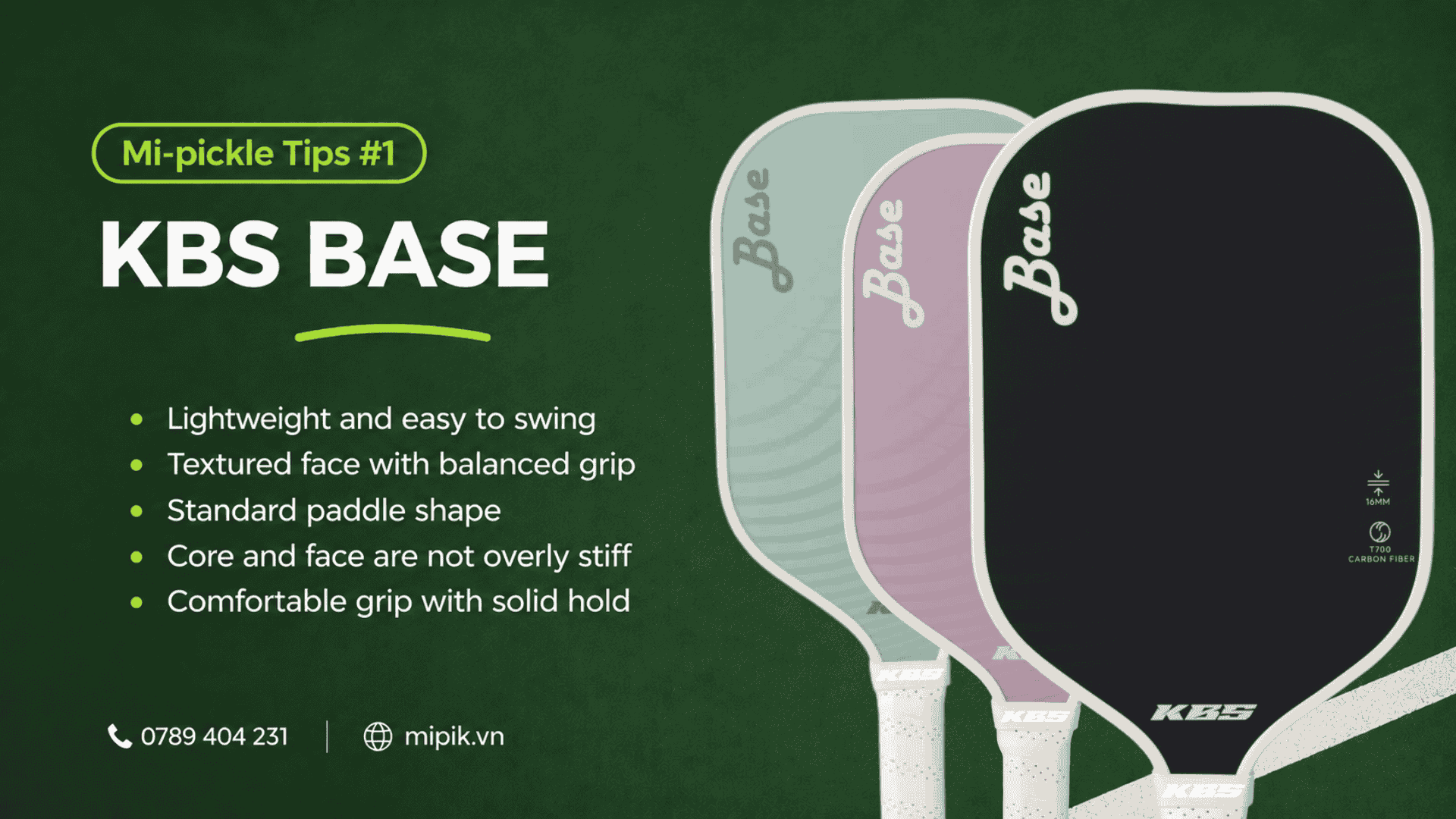
Pickleball KBS Base 16mm
3.2. Kamito Alpha X 1 Star
Kamito Alpha X 1 Star is better suited to beginners who already have some basic technique and want a paddle with more room to progress. It uses Japanese Toray Carbon with a naturally textured surface, giving players more friction when starting to work on topspin, slice, and directional control.
The Triple Foam Core combines MPP and EVA Foam, while the 16mm thickness keeps the overall direction more balanced than an aggressively thin power paddle. Its 14.5 cm handle is also useful for players who use a two-handed backhand or prefer more room on the handle.
Alpha X 1 Star makes sense for players who expect to play regularly and do not want to move on from a very basic paddle too quickly. Complete beginners can still use it, but it may take a little more time to understand the response compared with a simpler entry-level model.
| Specification | Details |
|---|---|
| Surface | Japanese Toray Carbon |
| Core | Triple Foam Core: MPP + EVA Foam |
| Dimensions | 19 × 41.8 cm |
| Thickness | 16mm |
| Weight | 225 ± 5g |
| Handle Length | 14.5 cm |
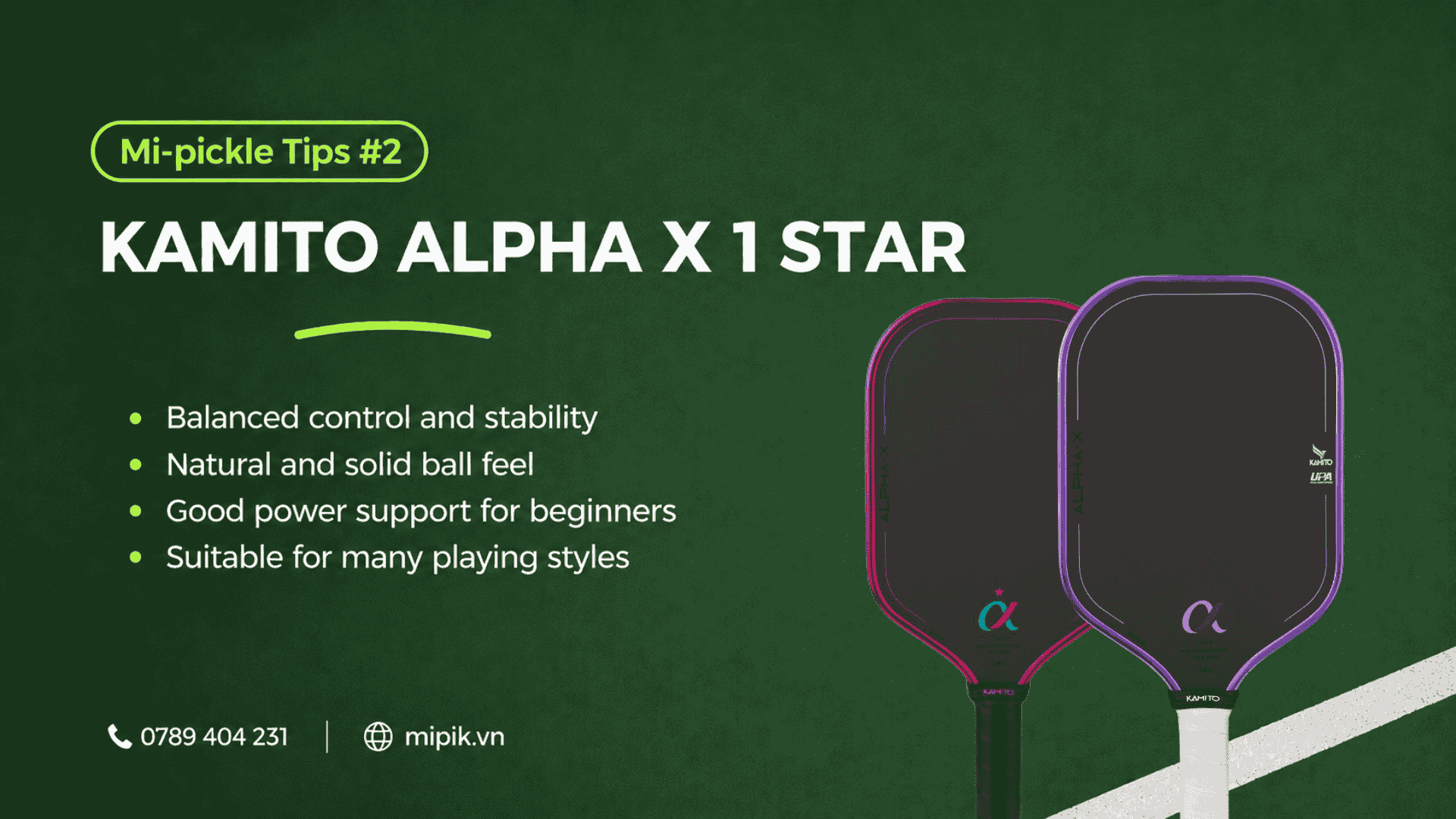
Kamito Alpha X 1 star paddles
3.3. Sypik Triton 5:
Sypik Triton 5 is aimed at beginners who already have basic technique or recreational players looking to move into a textured T700 Carbon paddle. The 16mm construction gives it a stable base for dinks, resets, and controlled transitions, while the textured face gives players more room to develop spin.
At approximately 227g, Triton 5 is not an ultra-light paddle, but it still sits in a range that balances stability with maneuverability. It makes sense for players who have started learning the soft game but also want to develop more topspin on serves and drives.
Players who prefer an extremely light paddle should still try it in person before choosing. For everyone else, Triton 5 can be a practical step up from a basic beginner setup.
| Specification | Details |
|---|---|
| Surface | Textured T700 Carbon |
| Thickness | 16mm |
| Weight | Approx. 227g |
| Dimensions | 41.9 × 18.8 cm |
| Handle Length | 14.1 cm |
3.4. Joola Pro V – A Premium option with more room to grow
JOOLA Pro V is the premium option in this group and is better suited to beginners with a larger budget who want to start with a paddle they can continue using as their game develops. The line combines a Textured Carbon surface, Propulsion Core, KineticFrame, and Hyperfoam Edge Wall in a more performance-oriented construction.
The paddle provides more pace on drives and counters than a basic beginner model, while the textured face gives players plenty of room to work on spin. The trade-off is that the stronger rebound requires better touch on drops, dinks, and resets, especially during the first few sessions.
Because Pro V is available in different shapes, beginners should not choose based only on specifications or what a professional player uses. Testing the shape and balance in hand is much more useful, particularly if you are still learning whether you prefer extra reach, faster hands, or a larger hitting area.
| Specification | Details |
|---|---|
| Brand | JOOLA |
| Surface | Textured Carbon |
| Core | Propulsion Core |
| Technologies | KineticFrame / Hyperfoam Edge Wall |
| Thickness | 16mm |
| Shape | Multiple options available |
4. How to take care of your first pickleball paddle
A few basic habits can help keep your paddle in better condition. Try not to scrape the edge repeatedly against the court, especially when reaching for low balls. Edge guard tape can add another layer of protection if you frequently play close to the surface.
Carbon paddle faces can collect ball residue and dust over time, so they should be cleaned periodically using a method appropriate for the surface. Avoid aggressive scrubbing or random household cleaners that may affect the finish.
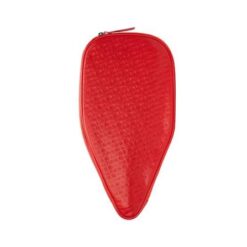
The grip also needs attention. Once it becomes slippery, dirty, or difficult to hold securely, replacing the overgrip can restore a more familiar handle feel. When carrying the paddle, keep it in a cover or dedicated compartment rather than letting it sit directly beside shoes, bottles, or other hard objects.
Heat is another factor to watch, especially in tropical conditions. Avoid leaving the paddle for long periods inside a hot car or under direct sun, where temperatures can build up quickly.
5. Where to buy pickleball paddles for beginners
The easiest way to shop for pickleball paddles for beginners is to compare a few models in the same price range rather than relying only on specifications. Two paddles can look very similar on paper but feel completely different once you swing them.
At Mipik, players can compare different weights, core thicknesses, grip sizes, and paddle shapes before choosing. This is particularly useful for beginners because balance and handle feel are difficult to judge from an online spec sheet alone.
For players ordering from the Philippines, check current stock, available models, pricing, and shipping details with the Mipik team before placing an order.
5.1. Why buy your pickleball paddles at Mipik?
Mipik carries pickleball equipment from brands including JOOLA, Selkirk, Kamito, Wika, Sypik, KBS, Facolos, and others. Instead of choosing only by brand, players can compare paddles according to level, budget, preferred feel, and the type of game they are developing.
Mipik also carries other court essentials such as pickleball shoes, balls, backpacks, paddle covers, grips, and accessories. Promotions, gifts, and bundle offers may vary depending on the campaign running at the time, so current offers should be checked before ordering.
5.2. Visit or contact Mipik
Mipik Center: 95 Tran Thien Chanh, Ho Chi Minh City
Mipik Store: 100 Hoa Lan, Phu Nhuan, Ho Chi Minh City
Mipik Hanoi: 466 Duong Buoi, Hanoi
Opening hours: 9:00 AM – 9:00 PM
Hotline / WhatsApp / Zalo: +84 767707128
6. Conclusion
When choosing among pickleball paddles for beginners, a midweight paddle around 8.0 oz with a 16mm core is a practical place to start. That combination usually gives enough stability to learn the soft game while still providing enough weight behind serves and drives.
KBS Base is the simplest starting point in this group. Kamito Alpha X 1 Star and Sypik Triton 5 make more sense for players who already know they will play regularly and want more room to develop spin and technique, while JOOLA Pro V is the higher-end option for players who want a more performance-oriented paddle from the beginning.
Specifications are useful, but the final decision should still come down to how the paddle feels in your hand. If possible, compare two or three models and test both hard shots and soft shots before choosing.